Published Oct 14, 2025
The Great Debate: Positive Reinforcement vs. Allowance
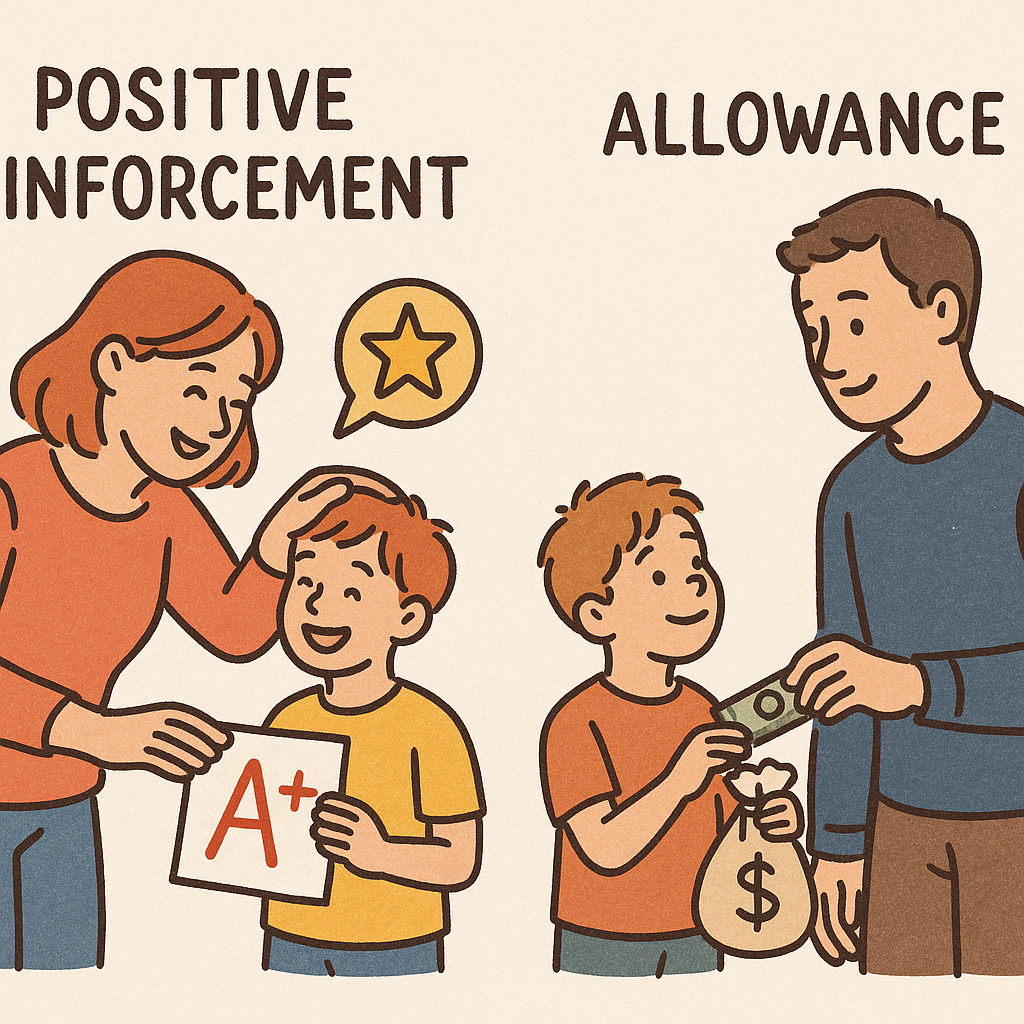
The Great Debate: Positive Reinforcement vs. Allowance
When it comes to raising children, parents are often faced with the challenge of finding the best ways to encourage good behavior, foster responsibility, and teach the value of money. Two common strategies are positive reinforcement and providing an allowance. While both approaches have their merits, they cater to different aspects of child development. In this blog post, we'll deep dive into how each method influences children aged 4-12 and which might be the best fit for your family dynamics.
What is Positive Reinforcement?

Positive reinforcement is a method used to increase the likelihood of a desired behavior by following it with a positive stimulus. This could be in the form of praise, a reward, or any form of acknowledgment that the behavior is appreciated. This approach is based on the theory that behaviors followed by positive outcomes are more likely to reoccur in the future.
What is an Allowance?

An allowance is a set amount of money given to a child at regular intervals, either as a payment for completing chores or as a fixed weekly or monthly amount without any requirements. The primary aim of an allowance is to teach children about financial responsibility and money management from an early age.
Benefits of Positive Reinforcement
- Encourages the repetition of good behavior.
- Builds self-esteem and confidence.
- Strengthens the parent-child bond through positive interactions.
- Helps children associate good behavior with positive outcomes.
Benefits of Allowance
- Teaches financial literacy and the value of money.
- Encourages independence and decision-making skills.
- Can be used to reinforce the concept of earning through completing tasks.
- Helps set the foundation for future financial responsibility.
Combining Methods for Holistic Development
While each method has its benefits, combining positive reinforcement with an allowance can provide a more holistic approach to child development. For instance, certain behaviors or chores could be attached to positive reinforcement in the form of praise or extra playtime, while more substantial tasks or achievements could be rewarded with an allowance or a special purchase. This strategy allows parents to teach the value of money and financial responsibility, while also encouraging good behavior and fostering a positive home environment.
Implementing the Strategies
When utilizing these methods, it's important to be consistent and fair. Set clear expectations and be transparent about what behaviors will be rewarded. It's also vital to tailor your approach to fit your child’s age, interests, and developmental stage to ensure the rewards are motivating and meaningful for them.
Conclusion
The decision between using positive reinforcement or an allowance depends on what values you want to instill in your children and what behaviors you're looking to encourage. By understanding the benefits of each approach and considering your family’s needs, you can create a balanced strategy that supports your child’s overall development and fosters a loving, supportive home environment.